Email
Website
|
Braedon McDonald, MD, PhD, FRCPC
Principal Investigator
Dr. Braedon McDonald is an Associate Professor in the Department of Critical Care Medicine and Department of Medicine in the Cumming School of Medicine. Dr. McDonald holds the Calvin, Phoebe, and Joan Snyder Chair in Critical Care Research, and is Director of Research and Innovation for the Department of Critical Care Medicine. Dr. McDonald is a clinician-scientist in the Snyder Institute for Chronic Diseases and International Microbiome Centre, where he leads a translational and basic science research program on microbiome-immune interactions in infection and critical illness. Dr. McDonald’s clinical practice focuses on multi-systems intensive care, and he is an attending intensivist in the ICU at FMC and SHC.
|
Email
LinkedIn
|
Katrina Yu, MSc
Lab Manager
Katrina obtained her MSc from the University of Lethbridge. Following graduation, she held laboratory management and technician roles at several research institutions, including the University of Lethbridge, the University of British Columbia, and the University of Calgary. In 2019, she joined the McDonald Lab as a laboratory manager, where she continues to provide critical support to facilitate the success of ongoing research initiatives. Outside of her professional responsibilities, Katrina enjoys spending quality time with her friends and family through a variety of recreational activities.
|
Email
Website
|
Matthew Stephens, PhD
Research Associate
Matthew obtained a masters degree in Molecular Medicine at the University of Portsmouth in 2013 and PhD in Immunology at the Brighton and Sussex Medical School in 2017. He travelled across 'the pond' in 2017 to pursue postdoctoral training with Professor von Der Weid uncovering novel mechanisms of host-microbe interactions at the intestinal epithelium and lymphatic pathophysiology. In his current role as research associate in the lab of Dr Braedon McDonald, he is developing nucleic acid-based ligands (aptamers) to address fundamental scientific and clinical questions with collaborations in host-microbe interactions spanning critical illness, neurodegenerative and respiratory disorders, lymphedema, and lipidema. He spends his free time golfing, taking his dog Robyn on adventures, and birding with his wife.
|
Email
LinkedIn
|
Oscar Tejada, MSc
Technician
Oscar is a technician in the lab. He completed his undergraduate degree in immunology at the University of Toronto before pursuing his Master’s in Dr. Paul Kubes’ laboratory at the University of Calgary, where he developed extensive expertise in intravital imaging. In his current role, Oscar supports ongoing research projects by performing experiments, maintaining lab operations, and assisting trainees and staff with their work. His background in inflammation, live-cell imaging, and animal models provides valuable technical expertise that contributes to the lab’s investigations into microbiome-immune interactions and critical illness.
|
Email
Website
|
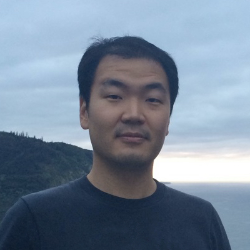
Heewon Seo, MSc, PhD
Senior Bioinformatics Scientist
Heewon studied at Seoul National University, Seoul, Korea, where he earned an MSc and PhD in Biomedical Informatics. During his PhD, he utilized next-generation sequencing for variant- and gene-based analysis, to identify genomic variants that are associated with drug-induced side effects. Heewon continued his research as a postdoctoral fellow at Princess Margaret Cancer Centre in Toronto, Canada, where he developed a translational framework for precision oncology using a compendium of preclinical pharmacogenomics datasets focused on drug combination therapies to improve current treatment strategies. Heewon is currently a Senior Bioinformatics Scientist at the Snyder Institute for Chronic Diseases, Cumming School of Medicine, University of Calgary. His research now focuses on translational microbiome science, where he applies computational and integrative approaches to uncover host–microbe interactions that drive chronic diseases.
|
Email
LinkedIn
|
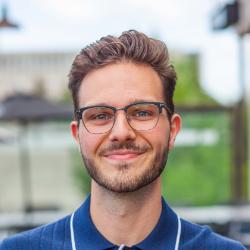
Colin MacKenzie, PhD
Postdoctoral Fellow
Colin studied at the University of Calgary, completing his PhD studying the molecular mechanisms of antibiotic resistance in bloodstream infections, using a multi-omics approach. He continued his research training with Dr. McDonald, transitioning into critical care, where he is interested in bringing next-generation microbiome sequencing techniques to the bedside. He hopes to unravel the complexity of health and multi-omics data to translate relevant information in a precision medicine approach for individual patients.
|
Email
LinkedIn
|
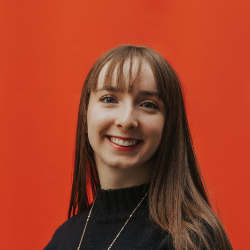
Kathryn Strayer
PhD student
Kathryn Strayer obtained her BHSc from the University of Calgary in Bioinformatics. She completed an honours thesis that used artificial neural networks to model learning in the human brain. After her Bachelor’s degree, Kathryn worked in the Department of Critical Care Medicine at the University of Calgary where she performed research on family engagement in critical care medicine. Currently, Kathryn is pursuing her PhD investigating the role of Candida spp. in ventilator-associated pneumonia. She uses a combination of techniques including RNA-sequencing analysis, 16s and ITS2 amplicon analysis and culture-based assays to characterize interactions between Candida spp., bacterial pathogens and the host immune system. Outside the office, Kathryn likes to hike, ski and cook.
|
Email
LinkedIn
|
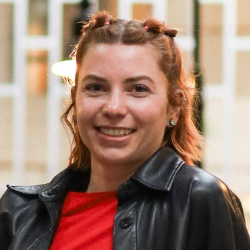
Anna obtained their BMSc in Interdisciplinary Medical Sciences from Western University, where they focused on neurology and microbiology. For their 4th year capstone project, they explored the application of virtual reality technology in the treatment of dementia. Anna also gained research experience in a microbiology lab studying plant and soil microbiomes, where they developed and validated novel assays, applied culture-based and molecular techniques, and worked with interdisciplinary teams to design and evaluate microbial-based treatments for crop health. Currently, Anna is an MSc student investigating the effect of quorum sensing on pathogenic gut bacteria colonization resistance, inflammation, and ICU patient outcomes. Their long-term research interests lie at the intersection of microbiology and neurology, specifically how the gut microbiome influences mental health.
|